Verjuice Sage Spritz Mocktail Recipe
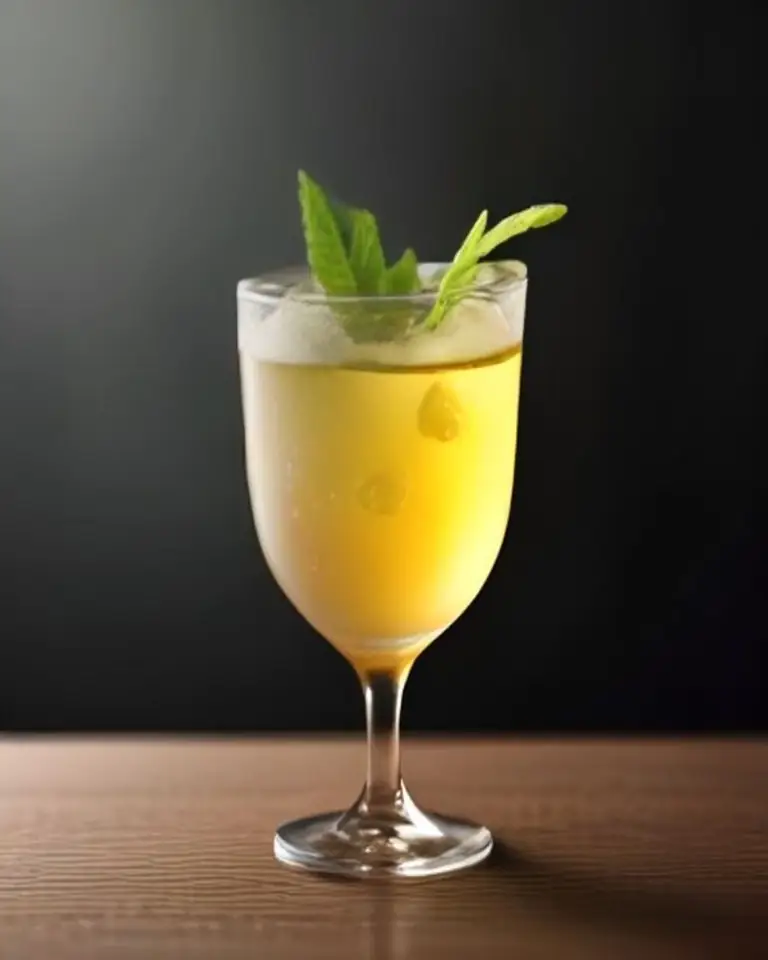
Unripe grape juice with sage and soda — the sourness wine has before it becomes wine.
- Category: Mocktail
- Glass: Wine glass
- ABV: 0%
- Difficulty: Easy
- Prep time: ~3 min
- Alcohol-free: ✓
Ingredients
- Verjuice45 ml (1.5 oz)
- Simple syrup20 ml (0.7 oz)
- Sage leaves4 piece
- Sparkling water120 ml (4.1 oz)
Before ice, the Verjuice Sage Spritz adds up to 185 ml. By volume: sparkling water 65%, verjuice 24% and simple syrup 11%. On top of that: sage leaves (4). For a round of four: 180 ml verjuice, 80 ml simple syrup, sage leaves (16) and 480 ml sparkling water, 740 ml before ice.
How to Make It
- Slap the sage leaves and shake them with the verjuice, syrup and ice.
- Double-strain into a wine glass over fresh ice.
- Top with sparkling water.
- Garnish with a sage leaf and a few green grapes.
Garnish
Sage leaf and green grapes
What it tastes like
The citrus acidity leads, it has a green, botanical backdrop, it is carbonated and it is layered, giving you something different each sip.
The technique
It is the verjuice and simple syrup that decide the method: the Verjuice Sage Spritz is shaken so they blend in completely. Counting only shaken recipes based on sparkling water, the catalogue has 3 (out of 347).
Glass and ice
It is served in a wine glass over ice cubes. Same glass, 40 other recipes: Blackberry Rosemary Sparkler, Cranberry Rosemary Spritz and Weißer Spritzer (G'spritzter) are the closest matches, and 11 are shaken like this one.
How strong it is
There is no alcohol in the Verjuice Sage Spritz; it is one of the catalogue's 86 recipes listed at 0% ABV.
Ingredient notes and substitutes
- Verjuice
- 45 ml here, 24% of the liquid. No other recipe in the catalogue calls for verjuice.
- Simple syrup
- 20 ml in this recipe (11% of the liquid). Found in 170 recipes in all; the pairing with sparkling water occurs in 5. No syrup? Use the same amount of honey, loosened with a little water.
- Sage leaves
- 4 in this recipe. It appears in 3 recipes, and this is the only one that pairs it with sparkling water.
- Sparkling water
- 120 ml here, 65% of the liquid. It appears in 10 recipes; 5 of them pair it with simple syrup, as this one does. Mineral water or plain soda both work; the minerals in mineral water leave a faint salty depth. The fizz lasts longest in a small, unopened bottle.
The Story
Verjuice was the everyday acid of medieval kitchens across the Mediterranean, displaced by lemons and now back precisely because it is not citrus.
From Turkey the catalogue has 9 recipes; Sour Cherry Fizz, Pomegranate Rose Cooler and Ayran come nearest to this one.
Frequently asked questions
- How is a Verjuice Sage Spritz mixed?
- Shaken and served in a wine glass over ice cubes: 4 steps, about 3 minutes.
- Does a Verjuice Sage Spritz contain alcohol?
- No. The catalogue lists it at 0% ABV, and none of its 4 ingredients is a spirit, liqueur, wine or beer.
- Is a Verjuice Sage Spritz hard to make?
- Easy: 4 ingredients and 4 steps; the steps call for a shaker and a fine strainer.
759 recipes in your pocket
Similar recipes
Collections
The Verjuice Sage Spritz is filed under 4 collections: Non-Alcoholic Cocktails (86 recipes), Sparkling Cocktails (110), Aperitif Cocktails (102) and Turkish Drinks (9).
Alcoholic drink recipes are intended for those aged 18 and over. Please drink responsibly.